
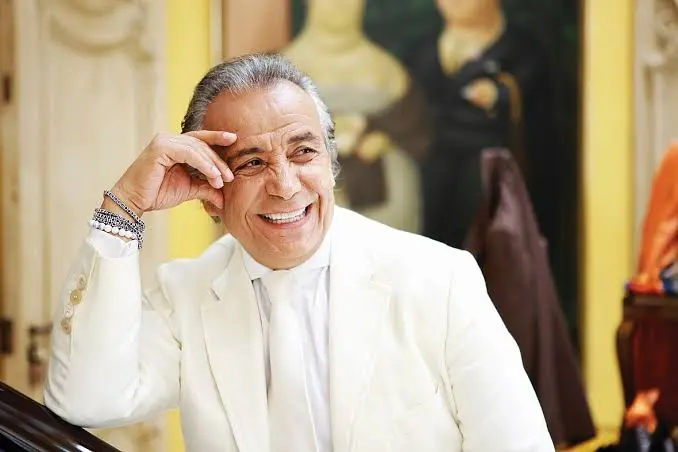
Bijan Pakzad personal information
Bijan Pakzad, better known by his stage name Bijan, was an Iranian-American luxury fashion designer who was born in Tehran, Iran, on April 4, 1940, and died in Beverly Hills, California, on April 16, 2011. Born from a wealthy Iranian family, he received his education in Europe, especially at the Institut Le Rosey in Switzerland. After that, he studied design in Italy and Switzerland. He had two wives: Sigi Pakzad, with whom he had a daughter named Daniela, and Tracy Hayakawa, with whom he had two children, Alexandra and Nicolas. Prior to his death in 2011 from complications following a stroke and brain surgery, he was well-known in Beverly Hills society. His luxurious lifestyle and sophisticated taste were well recognised.
Net Worth and Lifestyle
When Bijan passed away in 2011, his estimated net worth was $50 million. His fashion and fragrance empire, which reportedly brought in over $3 billion in sales globally, was the main source of his riches. Among his properties were a home in Malibu and a 12,000-square-foot mansion in Los Angeles that was decorated with more than 100 terra-cotta flowerpots.Bijan’s way of life embodied luxury and reflected the values of his brand.
Early Life and Family Background
Bijan Pakzad was born in Tehran, Iran, on April 4, 1940, and grew up in a wealthy household. Bijan was able to attend the esteemed Swiss boarding school, Institut Le Rosey, thanks to his father’s success as an industrialist in the steel sector. In Italy and Switzerland, he pursued additional design education, which had a significant impact on his aesthetic sensibility.
Bijan’s career path was significantly shaped by his early exposure to European fashion and culture. His future pursuits in the luxury fashion sector were made possible by his family’s wealth and love of the arts, which fostered his developing interest in upscale design.
Career Beginnings and Key Milestones
With the goal of introducing European style to American clothes, Bijan moved to Los Angeles, California, in 1973. He opened his upscale Beverly Hills boutique on Rodeo Drive three years later, in 1976. Operating on a “by appointment only” basis, the business created an air of exclusivity that drew a prestigious clientele that included worldwide royalty, U.S. presidents, and well-known entertainment personalities.
Bijan’s decision to produce personalised apparel at his own textile plant in Italy demonstrated his dedication to quality. His position as a purveyor of luxury was cemented by this commitment to quality, which also helped his brand grow into accessories and fragrances, further solidifying his standing in the fashion business.
Notable Works and Achievements
The House of Bijan, which sold items like a $10,000 Colt.38 calibre automatic pistol with 24-karat gold components and $65,000 luggage with crocodile accent, came to represent luxury. His business, which is frequently called “the most expensive store in the world,” has opulent furniture, such as a $400,000 Lucite-and-brass staircase and $500,000 worth of antique Persian carpets.
Bijan’s scents won praise from all around the world, and his brand became known for its unique circular glass flacon. Numerous FiFi Awards, such as Best National Advertising Campaign, Star of the Year for Men’s Fragrance Specialty/Department Stores, and Best Women’s Fragrance Package and Most Successful Men’s Fragrance in 1988 Men’s in 1997, were given to him in recognition of his services to the business.
Personal Life and Relationships
Bijan’s personal life was just as active as his career. Daniela was the child of his first marriage to Sigi Pakzad. He was married twice. Nicolas and Alexandra were born from his second marriage to model and interior designer Tracy Hayakawa. Divorce ended both marriages.
Bijan was well-known for his passion for high-end vehicles and possessed a number of specially designed vehicles, such as a yellow Rolls-Royce Phantom Drophead Coupé, a black Mercedes-Benz SLR McLaren with a customised paint job, a yellow Ferrari 430 Spider, and a yellow Bentley Azure. These cars, which were frequently spotted parked outside his Rodeo Drive store, came to symbolise the opulent image of his company.
Legacy and Influence
Bijan had an impact on art and culture in addition to fashion. His partnerships with high-end automakers like Rolls-Royce and Bugatti produced specially created automobiles that reflected his distinctive aesthetic. His boutique’s design and marketing tactics, which prioritise exclusivity and individualised service, raised the bar for luxury retail.
In order to ensure that his father’s legacy continued after his stroke death in 2011, Bijan’s son, Nicolas Bijan Pakzad, assumed control of the House of Bijan. In order to draw in younger, wealthier customers, Nicolas maintained the brand’s customs of exclusivity and fine craftsmanship while also introducing a contemporary viewpoint. The House of Bijan maintained the unmatched luxury experience for which Bijan Pakzad was renowned while broadening its appeal and changing its products under Nicolas’ direction.
The fashion industry is still feeling the effects of Bijan. His strategy for luxury retail, which places a strong emphasis on exclusivity, quality, and custom experiences, has become a model for luxury fashion firms all over the world. A tribute to Bijan’s unparalleled contributions to the business, the shop on Rodeo Drive continues to stand as a landmark.
Future Plans and Cultural Impact
Despite the death of Bijan Pakzad, Nicolas Bijan has led the House of Bijan to continued success. By working with other luxury industries and entering new markets, the brand has managed to hold onto its status as an emblem of luxury. Innumerable designers and businesspeople have been influenced by Bijan’s audacious, unwavering vision, demonstrating that an emphasis on exclusivity and excellence can result in unmatched success.
His influence on the business has solidified his reputation as a luxury pioneer, and his store continues to stand as a testament to his extravagant personality and unparalleled style. Bijan’s tale serves as an example of how a lasting legacy can be created with vision, passion, and perseverance.
Bijan Pakzad Summary
One of the most prestigious menswear designers in the world, Bijan Pakzad (1940–2011) was an Iranian-American luxury fashion designer better known by his moniker, Bijan. He gained international recognition for creating opulent apparel, accessories, and fragrances for presidents, nobility, and billionaires after being born in Tehran and receiving his education in Europe. Many people referred to his appointment-only boutique on Rodeo Drive in Beverly Hills as one of the priciest establishments on the planet. Before passing away in 2011 due to complications from a stroke, Bijan made a lasting impression on luxury fashion with his sophisticated elegance, striking use of colour, and lavish lifestyle.