

Social media has become one of the default ways customers discover, vet, and engage with small businesses, but managing it well takes more time than most owners have to spare. This guide covers what social media management actually involves, realistic 2026 pricing, the different ways to staff it, and how to choose the right approach for your business.
What Social Media Management Actually Includes
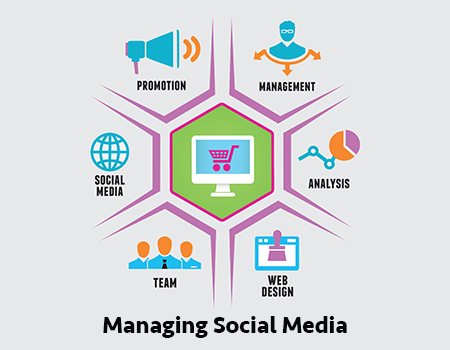
“Social media management” covers a range of ongoing work, and packages vary in how much of it they include:
- Strategy—defining goals, target audience, platform priorities, and a content plan tied to actual business outcomes rather than vanity metrics.
- Content creation—writing captions, designing graphics, and producing short-form video suited to how each platform actually works.
- Scheduling and publishing—maintaining a consistent posting cadence across chosen platforms.
- Community management—responding to comments and messages, engaging with followers, and handling customer interactions in real time.
- Reporting and optimization—tracking performance and adjusting strategy based on what’s actually working.
Cheaper packages often drop several of these—most commonly strategy and community management—and deliver only scheduled posting. Knowing which pieces are included (or missing) from a quote is the single most useful thing to check before signing.
What Does It Cost in 2026?
Social media pricing varies widely depending on scope, platform count, and whether you hire a freelancer, a small agency, or a larger firm. Realistic 2026 ranges:
- DIY tools: Scheduling software alone runs roughly $6–$450/month depending on the platform and number of channels—but it only handles posting, not strategy or content creation.
- Freelancers: Typically $25–$150/hour, or $500–$2,000+/month for ongoing work. Freelancers suit light-to-moderate posting needs and offer more individualized attention, though capacity is limited—you may need separate help for design or video.
- Entry-level agency packages: Often start around $500–$1,500/month for basic single- or dual-platform management with a modest posting cadence (roughly a dozen posts a month).
- Full small-business packages: Most small businesses land in the $500–$3,000/month range for services that include some combination of strategy, content creation, and reporting.
- Multi-platform / comprehensive management: $2,500–$6,000+/month once you add strategy depth, community management, paid social, and more frequent content.
- High-end agencies: $10,000–$25,000+/month, typically reserved for mid-market or national brands rather than small businesses.
A useful benchmark: pricing under roughly $750–$1,500/month usually means templated content and limited strategic input, while packages in the $500–$3,000/month range are where most small businesses find a workable balance between cost and quality.
Freelancer vs. Agency vs. In-House
| Option | Best for | Trade-offs |
| Freelancer | Light-to-moderate posting, tight budgets, businesses wanting a single dedicated point of contact | Limited capacity; may need extra help for design, video, or paid ads |
| Agency | Businesses needing multi-platform coverage, strategy, and reporting without hiring internally | Higher cost, less individualized attention than a freelancer |
| In-house hire | Businesses with steady, high-volume social needs and budget for a full-time role | Highest fixed cost; requires management and training |
| DIY + tools | Very early-stage businesses testing what resonates before investing further | Requires real-time investment from the owner or staff; no strategic outside input |
Many small businesses start with a freelancer or entry-level agency package, then move to fuller management once social media starts generating a measurable return.
What Drives the Price Up or Down
- Number of platforms—each additional platform (Instagram, TikTok, LinkedIn, Facebook, X) adds content and management time.
- Content type—short-form video costs more to produce than static image posts or text updates.
- Posting frequency—daily posting across platforms costs meaningfully more than a few posts per week.
- Community management—actively responding to comments and messages adds ongoing labor beyond scheduling.
- Paid social—advertising is typically priced and managed separately from organic content, so clarify whether a quote includes it or not.
- Reporting depth—basic post-count reporting costs less than analytics tied to leads or revenue.
How to Choose the Right Fit
- Get a written scope, not just a price. A quote should specify exactly what’s included—number of platforms, posts per week, and whether community management and reporting are covered.
- Match platforms to where your customers actually are, rather than paying for coverage across every platform by default.
- Ask how success is measured. Look for reporting tied to engagement, traffic, or leads—not just “posts published.”
- Be cautious of packages priced far below market. Extremely low pricing usually means templated content and minimal strategic input, which can cost more later in wasted time and weak results.
- Start smaller if you’re untested. A freelancer or entry-level retainer is a reasonable way to learn what resonates with your audience before committing to a larger monthly spend.
Conclusion
For most small businesses, a realistic social media management budget in 2026 falls between $500 and $3,000 a month, depending on how many platforms you need covered and how much strategy, content, and community management is included. The right choice isn’t the cheapest option—it’s the one that matches your actual platform needs and gives you a clear, written scope of what you’re paying for each month.