
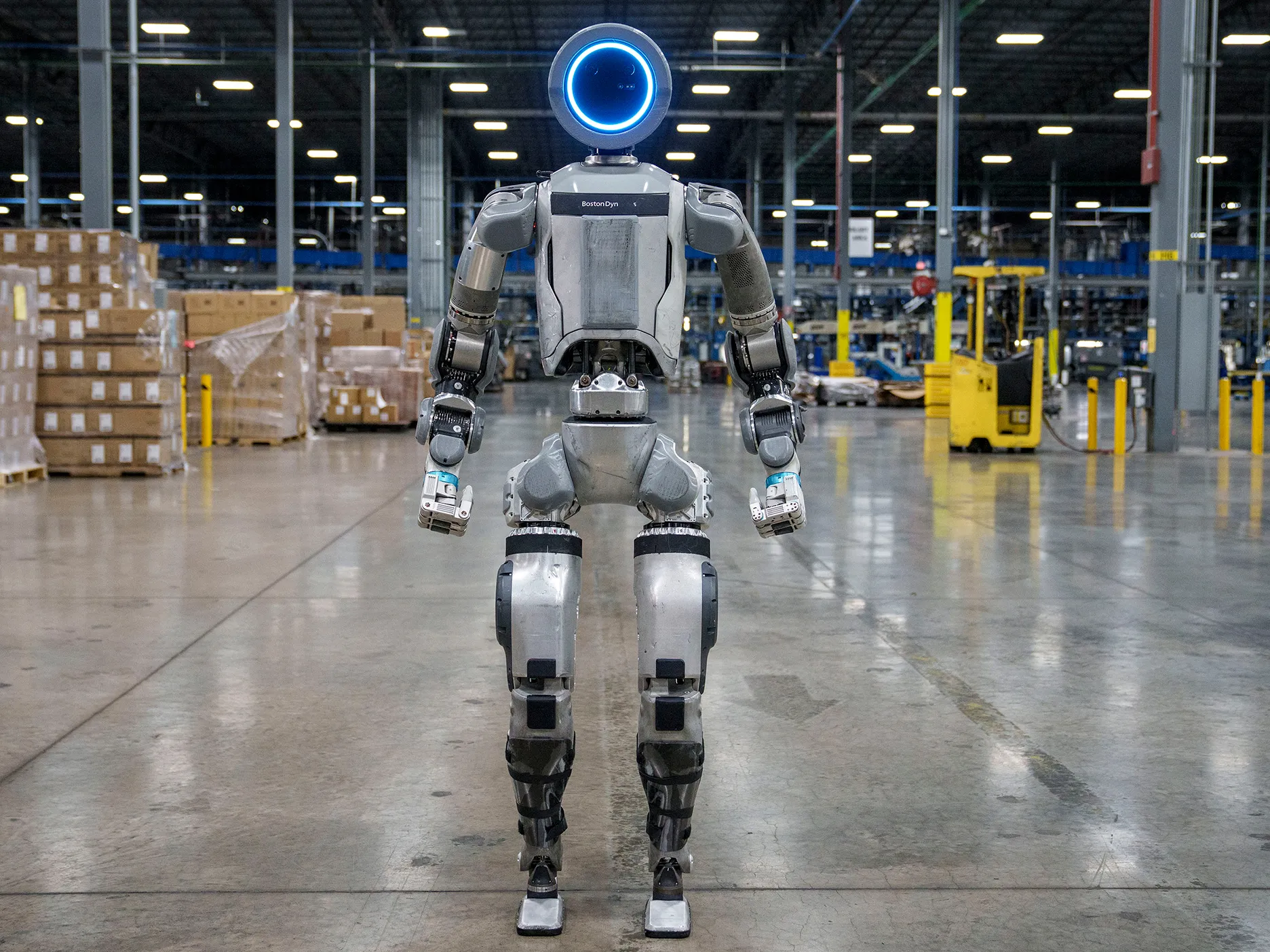
Humanoid robots are advanced, autonomous, or semi-autonomous machines designed to physically resemble the human body—typically featuring a head, torso, arms, and legs. These robots are engineered to operate within environments built for humans, using human-like tools and movement (bipedalism) to assist with tasks, reducing the need for specialized infrastructure.
How do humanoid robots work?
Humanoid robots are learning and adapting quicker than ever before, utilizing artificial intelligence models to perceive, sense, plan, and autonomously perform complicated tasks in a variety of environments.
These robots are outfitted with advanced actuators, sensors, and on-robot computing and software that allow them to move and interact in ways that mirror human dexterity, including self-navigation. Robots are taught varied movements and responses in simulated environments to prepare them for the unpredictability of real-world circumstances.
Following extensive AI training, optimal models and software workflows are installed on the robot’s onboard computing systems. Humanoid robots are highly adaptable due to their effective on-chip computation, AI, actuators, sensors, manipulation, dexterity, and locomotion strategies, which allow them to do a range of tasks.
Because our world was created by humans, humanoid robots excel at operating successfully in human-centric contexts with minimum changes.
How do you train humanoid robots?
Robot learning is powered by adaptive algorithms and extensive training in both virtual and real-world environments. This enables humanoid robots to learn and develop complex abilities such as bipedal mobility, object manipulation, and social interactions.
To enable scalable and efficient training, developers employ an optimized software architecture that includes data intake and processing pipelines.
training frameworks and containerized microservices. AI foundation models, simulation environments, synthetic data, and specific learning approaches such as reinforcement and imitation learning are used to train robots to perform tasks such as grabbing things and negotiating obstacles in various settings.
Training employs digital twins that correctly imitate real-world circumstances, creating a risk-free environment for robot models to learn and grow. This avoids the risk of physical harm while also allowing for faster iteration by training multiple models at once. In certain circumstances, training continues as the robot operates and practices in the actual world.
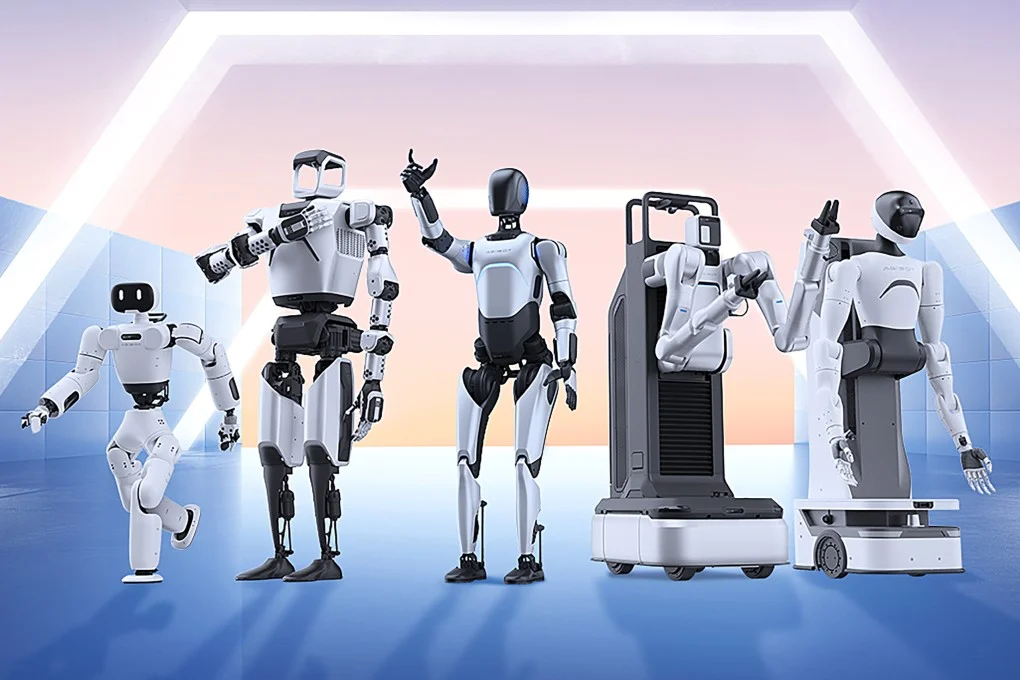
Key emerging humanoid robot training strategies include the following:
Machine Learning: Humanoid robots are equipped with machine learning algorithms that allow them to study data to learn from previous actions and process sensor data to make real-time judgments.
Imitation Learning: Robots can learn new skills by copying human movements. These actions are detected by sensors or cameras and then converted into robotic commands that mirror the observed behaviors. This strategy is particularly effective for teaching robots nuanced, sophisticated tasks that are difficult to codify using regular programming methods.
Reinforcement Learning: This technique employs a mathematical equation to reward robots for correct actions while penalizing them for erroneous actions. The robot adjusts and improves its performance over time through trial and error, as well as the incentive system.
Functional Safety for Humanoid Robots
Designing humanoids to function securely and collaborate with humans necessitates the incorporation of various safety considerations.
Traditional functional safety ensures that robot hardware and software are designed to perform properly and without causing harm.
Robotic safety features emergency and protective stops to help prevent accidents.
Human-machine collaboration safety involves recognizing and responding correctly to human presence and behaviors.
Sensor safety involves testing and validating the accuracy of robot sensors so that humanoids can appropriately perceive their surroundings.
What are the real-world applications for humanoid robots?
Limited Training Data
Training AI models for functional humanoid robots necessitates massive amounts of data. The precise human actions that humanoids are trained to replicate, combined with the unpredictable nature of real-world events, make it extremely difficult to collect and categorize the data required for optimal robot performance.
Design
Humanoid robots must be light, adaptable, and powerful. Their control systems must also provide the balance and coordination required for bipedal movement, with advanced sensors and actuators that are precise and soft enough to emulate the dexterity of the human hand. Furthermore, onboard processing systems must be compact enough to fit on the humanoid form factor while providing sufficient computation to operate complex AI models with low latency.
Energy Efficiency
Because of the limited space for onboard batteries, humanoids must operate in a way that maximizes functionality while consuming the least amount of energy. It is critical that autonomous robots can complete complex tasks without quickly depleting their energy reserves.
Degrees of Freedom
Increased DOF enables humanoid robots to function with greater dexterity and more human-like movements, allowing them to execute a broader range of activities and adapt to changing circumstances. However, this necessitates coordination between complicated mechanical and control systems.
How Can You Get Started With Humanoid Robots?
NVIDIA AI and Omniverse™ systems help advance humanoid robot development. The three main computing systems for getting started with humanoid robotics are:
1. NVIDIA NeMo uses NVIDIA DGX™ supercomputers to train AI models for robotics applications.
2. NVIDIA Isaac™ Lab and NVIDIA Isaac Sim, built on NVIDIA Omniverse, allow robots to learn and improve their skills in simulated environments.
3. NVIDIA Isaac powers Jetson™ Thor, allowing humanoid robots to execute complicated jobs and communicate safely with humans and machines. Jetson Thor is built on the NVIDIA Blackwell architecture and runs multimodal AI models for humanoid robots. It includes an integrated functional safety processor, a high-performance CPU cluster, and 100Gb of Ethernet bandwidth.