
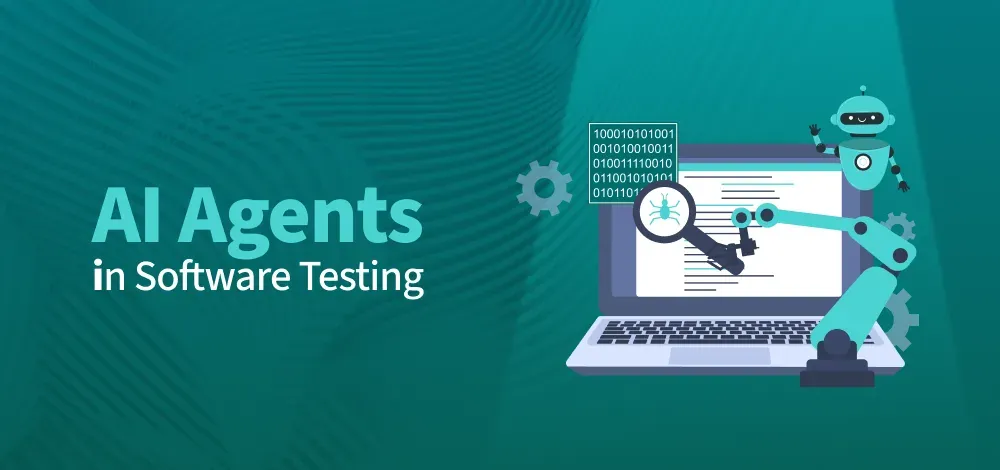
Software development relies heavily on quality assurance (QA). Traditional testing methods are having trouble keeping up with the ever-increasing complexity of digital experiences, as well as the ever-increasing requirements for test coverage and the continuing shortening of release cycles. A powerful component of contemporary AI testing services, AI agents in software testing can automatically generate test cases, analyze code, simulate edge cases, and even carry out tests without human supervision.
- TestMu AI : Redefining Test Generation
TestMu, which was designed from the ground up to be AI-native, makes use of intelligent agents to plan, write, carry out, and evaluate tests throughout the entire software lifecycle. The platform, built for scale, makes it possible to test web, mobile, and enterprise applications seamlessly on real devices, real browsers, and customizable environments from the real world. TestMu AI automatically generates meaningful, high-impact test scenarios by utilizing advanced machine learning to comprehend application behavior.
Key Strengths
- Intelligent Test Generation: TestMu is able to automatically generate functional test scripts with the assistance of descriptions written in natural language.
- Coverage Assurance creates tests that cover edge cases that manual testers typically overlook by examining the code paths and user flow.
- Auto-Maintenance: In response to changes in the application, TestMu can be customized to use existing test cases, thereby minimizing the maintenance load that traditionally besieges traditional automated tests.
How It Helps QA Teams
Teams that want to increase test coverage without spending a lot of time manually writing test scripts will find that TestMu works well for them. When requirements change frequently in an agile environment and regression testing becomes cumbersome, it comes in handy. The ability of TestMu to independently create, maintain, and develop tests makes it an appealing option for businesses that place a strong emphasis on constant quality.
- Runner H: Smart Test Execution & Monitoring
One of the most promising AI agents in today’s AI testing services is called Runner H. It is made to organize and make test execution more efficient across a variety of environments and devices. While some AI testers are designed to create tests, Runner H stands out because it makes tests run successfully and thoroughly instead.
Key Strengths
- Cross-Platform Execution: Runner H can run tests on a variety of platforms, including the web, mobile, and APIs.
- Real-Time Monitoring and Reporting: It provides context-sensitive diagnostics, notifies teams of failures as they occur, and monitors test runs in real time.
- Intelligent Prioritization: Based on previous failure rates and production rates, artificial intelligence can determine which tests are most important.
How It Helps QA Teams
If your team is unable to manage test environments or encounters bottlenecks in test execution, Runner H can assist. By automating execution and providing actionable information about the run, it reduces the amount of time test engineers spend supervising and debugging. Large teams with complicated test matrices and a lot of manual scheduling and monitoring will do best with Runner H.
- Agent.ai : The Conversational Tester
Agent.ai’s conversational interface is a refreshing addition to AI-based testing. Testers are able to communicate with Agent.ai through prompts in natural language and do not require extensive technical knowledge.
Key Strengths
- Natural Language Interaction: Agent.ai converts user descriptions of what they want tested into executable test scripts.
- Context-Aware Testing: The agent is aware of the context and intent of the application and frequently creates test cases that closely resemble user behavior.
How It Helps QA Teams
The Agent.ai is especially helpful in cross-functional teams with developers, a product manager, and a QA engineer. Since the test generation’s conversational experience is straightforward and non-technical stakeholders are included in quality assurance activities, the generation barrier is minimized. This makes the testing process more inclusive and has faster feedback loops, both of which are important in agile and DevOps environments.
- Replit Agent : Bridging Development & Testing
Replit Agent is an adaptable AI agent that is a part of the Replit ecosystem, which is known for being a cloud-based coding environment. Although the Replit is historically viewed as a space where people code together, the Replit Agent introduces testing intelligence to the development process.
Key Strengths
- Integrated Experience: Developers can write code and write tests in the same environment without having to switch tools.
- Live Feedback: As code is written, Replit Agent provides real-time test recommendations and execution feedback.
- Collaborative Debugging:Replit makes it possible for teams to collaborate in real time and discuss and resolve test failures together.
How It Helps QA Teams
Replit Agent keeps testing and development apart. Bugs can be found earlier in the development cycle, before the code is committed to a repository, when tests are created and executed in the same editor.
Operator : The Autonomous Quality Hub
An AI agent called Operator was created to serve as a central command center for testing. It is capable of more than just creating and running scripts on its own. Whole test strategies can be planned, monitored, and optimized by the operator.
Key Strengths
- Centralized Testing Strategy: To create well-optimized and targeted testing strategies, the operator takes into account the objectives of the product, previous test results, and risk considerations.
- Continuous Learning: The AI is developed over time by eliminating redundant or duplicate tests, identifying high-impact test cases, and prioritizing what is most important.
- End-to-End Integration: It easily integrates with CI/CD pipelines, defect monitoring systems, and monitoring systems to create a QA ecosystem that is integrated and complete.
How It Helps QA Teams
Operator is ideal for mature teams with complex QA processes. By autonomously steering test coverage investments where they matter most, it reduces the need for manual decision-making. Through close contact with software delivery pipelines, Operator is able to make quality decisions that are both data-driven and measurable.
Conclusion
The objectives of your team should guide your selection of the appropriate AI agent for software testing.
- TestMu AI – Best for autonomous test generation and maintenance.
For robust test execution and real-time insights, Runner H is ideal.
- Agent.ai – Great for natural language-driven testing.
Replit Agent is ideal for testing and development workflows that are integrated.
- Operator – Best for strategic, autonomous QA orchestration.
Collectively, these tools are the future of AI-based quality assurance. They help teams build high-quality software quicker than ever before by helping to cut manual labor, improve coverage, and accelerate feedback loops.