
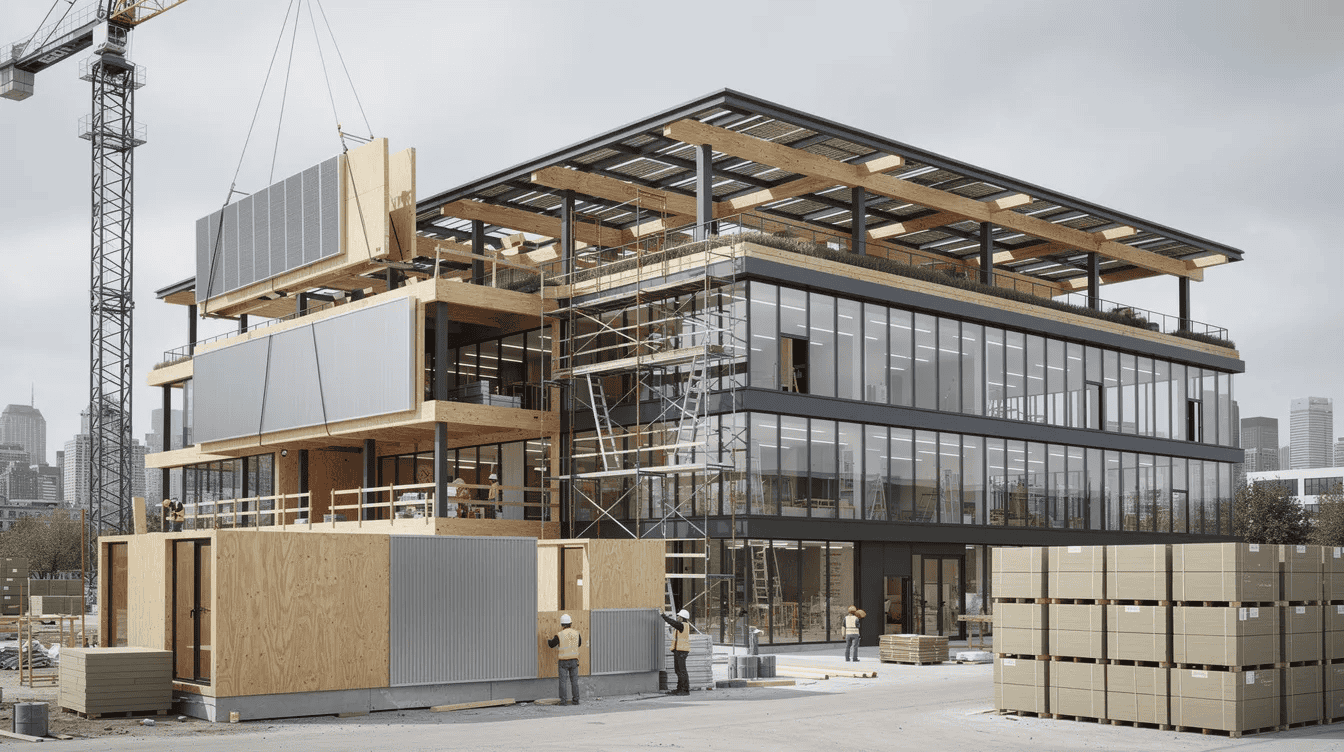
Digital technologies are being quickly adopted by the smart construction sector to improve the speed, safety, efficiency, and cost-effectiveness of projects. In 2026, smart construction will play a significant role in all aspects of contemporary construction projects, from site management and upkeep to planning and design.
Artificial intelligence, robotics, drones, Building Information Modeling, IoT sensors, and digital twins are some of the technologies that construction businesses are using to increase efficiency while lowering mistakes and delays.
1. Artificial Intelligence in Building
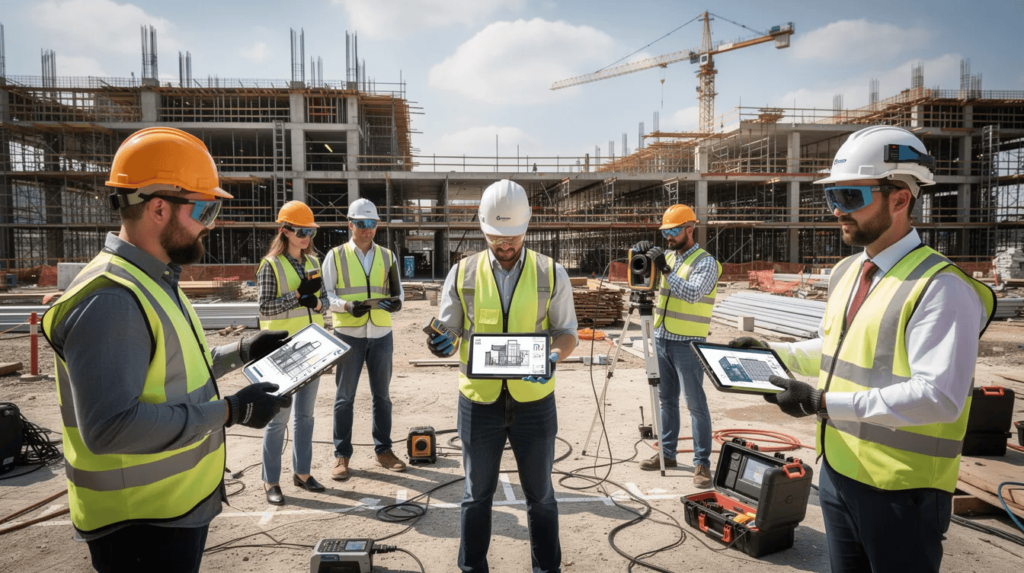
One of the key technologies that will change building in 2026 is artificial intelligence (AI). AI can help businesses make better decisions by analyzing vast volumes of project data.
AI can be used by construction companies to forecast project delays, estimate expenses, spot possible safety hazards, and enhance resource planning.
2. Building Information Modeling (BIM)
Before beginning actual construction, construction teams can produce intricate digital models of structures thanks to Building Information Modeling.
BIM facilitates the sharing of project data amongst contractors, architects, engineers, and clients. Additionally, it can assist in identifying design disputes before they develop into costly on-site issues.
3. Construction Drones
Drones are being used more and more to survey land, take overhead photos, monitor construction sites, and examine buildings.
Compared to conventional inspection techniques, they can cover broad regions considerably more quickly. Project managers can monitor progress and compare actual construction with the original design with the aid of drone data.
4. Internet of Things (IoT)
IoT devices link sensors, tools, construction equipment, and other devices to digital systems.
Temperature, worker positions, equipment conditions, structure conditions, and environmental variables can all be monitored using smart sensors. Construction teams can react to issues faster with the use of this information.
5. Digital Twins
A virtual replica of a real building, structure, or construction project is called a digital twin.
It can integrate project data with real-time sensor data. This enables teams to track building performance, spot possible problems, and enhance maintenance once construction is over.
6. Construction Robotics
Construction jobs that are physically taxing and repetitious are being automated with the use of robotics.
Bricklaying, concrete work, surveying, demolition, and material handling are all tasks that robotic systems can help with. Automation can lower the dangers involved in hazardous tasks while increasing efficiency.
7. 3D Printing
By enabling the layer-by-layer production of specific building components and structures, 3D printing is opening up new construction opportunities.
It may cut down on building time and expenses as well as material waste. For initiatives involving bespoke construction and inexpensive housing, large-scale 3D printing is very intriguing.
8. Augmented Reality and Virtual Reality
Construction workers can see projects both before and during construction thanks to AR and VR technologies.
While augmented reality can overlay digital data over the actual construction site, virtual reality can offer an immersive view of a planned project.
9. Smart Construction Equipment
The automation and connectivity of modern construction equipment are increasing.
Information on fuel consumption, location, operating hours, and equipment performance can be obtained from smart excavators, cranes, bulldozers, and other devices. Businesses can use this data to increase equipment use.
10. Wearable Technology
Construction site safety can be enhanced by wearable technology such as smart glasses, smart helmets, and connected safety vests.
Certain wearable devices can track the whereabouts of employees, identify environmental risks, or offer hands-free access to critical data.
11. Cloud-Based Construction Software
Construction crews may access project information from many devices and places thanks to cloud technology.
Instead of depending on paper records, project managers can handle papers, timelines, budgets, communications, and progress reports using cloud-based platforms.
12. Predictive Analytics
Predictive analytics makes use of both historical and current data to forecast future events.
It can be used by construction firms to predict budget issues, equipment malfunctions, delays, and safety hazards. Teams can take corrective action before minor issues turn into significant ones with the use of early alerts.
Questions and Answers
What is smart construction?
Smart construction refers to the use of advanced digital technologies to improve the planning, design, construction, operation, and maintenance of buildings and infrastructure.
What is the most important smart construction technology in 2026?
AI is among the most influential technologies because it can support cost estimation, scheduling, risk management, safety monitoring, and decision-making.
How does AI help construction companies?
AI can analyze project data to identify patterns, predict potential problems, optimize schedules, estimate costs, and support better resource management.
Why are drones used in construction?
Drones are used for site surveys, aerial photography, inspections, progress monitoring, mapping, and collecting information from areas that may be difficult or dangerous for workers to access.
What is the role of IoT in construction?
IoT connects sensors, equipment, and devices so construction teams can collect and monitor real-time information about projects, machinery, environmental conditions, and safety.
How does BIM improve construction projects?
BIM creates a shared digital model containing important project information. It can improve collaboration and help teams detect design conflicts before construction work reaches the site.
Can robotics replace construction workers?
Robotics is more likely to assist workers than completely replace them. Robots are particularly useful for repetitive, dangerous, or physically demanding tasks, while humans remain important for decision-making and specialized work.
Is 3D printing useful for construction?
Yes. 3D printing can be useful for producing certain building components and structures while potentially reducing material waste, labor requirements, and construction time.
How does smart technology improve construction safety?
Smart technology can monitor site conditions, track equipment, identify hazards, and provide alerts. Wearable devices and connected sensors can also help improve worker safety.
What is the future of smart construction?
The future will likely involve greater integration between AI, robotics, IoT, BIM, digital twins, automation, and cloud platforms. These technologies can make construction more connected, data-driven, and efficient.