

Accurate financial forecasting has always been essential for business planning, but traditional methods relying on spreadsheets, historical averages, and manual analysis often struggle to keep pace with fast-changing markets. Artificial intelligence is transforming financial forecasting by processing vast amounts of data, identifying complex patterns, and delivering predictions with a level of speed and accuracy that manual methods simply can’t match. This guide explores how AI is reshaping financial forecasting and how businesses can start leveraging it.
What Is AI-Powered Financial Forecasting?
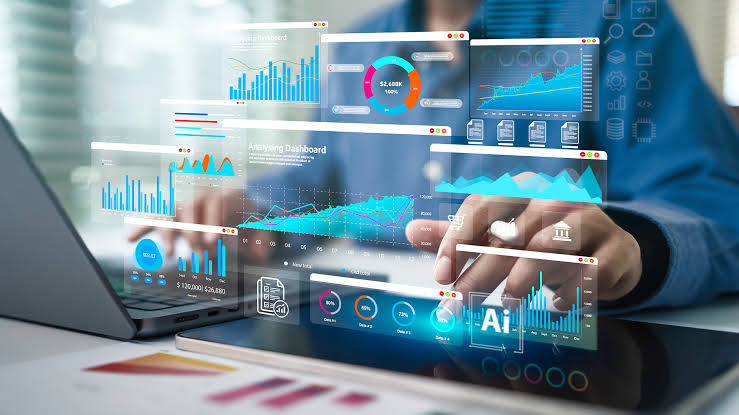
AI-powered financial forecasting uses machine learning algorithms, statistical models, and large datasets to predict future financial outcomes — such as revenue, cash flow, expenses, and market trends. Unlike traditional forecasting, which often relies on linear assumptions based on historical data, AI models can identify non-linear patterns, adapt to new data in real time, and factor in a wider range of variables simultaneously.
Why Businesses Are Turning to AI for Forecasting
1. Improved Accuracy
AI models can analyze far more variables than traditional methods, including market trends, seasonality, economic indicators, and even external factors like weather or social sentiment, resulting in more precise predictions.
2. Faster Decision-Making
AI can process and analyze data in real time, allowing finance teams to generate updated forecasts in minutes rather than days or weeks, enabling quicker responses to changing conditions.
3. Reduced Human Bias
Traditional forecasting can be influenced by human assumptions or optimism bias. AI models rely on data patterns, reducing the risk of subjective errors skewing predictions.
4. Scalability
As businesses grow and data volume increases, AI systems can scale to handle larger, more complex datasets without a proportional increase in manual effort.
5. Continuous Learning
Machine learning models improve over time as they’re fed more data, refining their accuracy with each forecasting cycle.
Key Applications of AI in Financial Forecasting
Revenue Forecasting
AI analyzes historical sales data, market trends, customer behavior, and external economic factors to predict future revenue with greater precision, helping businesses plan budgets and set realistic growth targets.
Cash Flow Forecasting
AI models can predict cash inflows and outflows by analyzing payment patterns, customer payment histories, and seasonal trends, helping businesses avoid cash shortages and plan for upcoming expenses.
Expense Forecasting
By analyzing spending patterns across departments, AI can predict future expenses and flag potential budget overruns before they happen.
Demand Forecasting
Particularly valuable for retail and e-commerce businesses, AI-driven demand forecasting predicts future product demand based on historical sales, market trends, and even social media sentiment, helping optimize inventory management.
Risk Assessment and Scenario Planning
AI can run multiple forecasting scenarios simultaneously, helping businesses understand potential outcomes under different conditions (e.g., economic downturns, supply chain disruptions) and plan contingencies accordingly.
Budget Planning
AI-assisted budgeting tools can recommend budget allocations based on predicted performance across departments or projects, improving resource allocation efficiency.
How AI Financial Forecasting Works
- Data Collection: AI systems pull data from multiple sources, including accounting software, CRM systems, market data, and external economic indicators.
- Data Cleaning and Preparation: Raw data is cleaned and structured to ensure accuracy before being fed into forecasting models.
- Model Training: Machine learning algorithms are trained on historical data to identify patterns and relationships between variables.
- Prediction Generation: The trained model generates forecasts based on current and historical data inputs.
- Continuous Refinement: As new data becomes available, the model updates and refines its predictions, improving accuracy over time.
Popular Types of AI Models Used in Forecasting
- Regression models: Useful for identifying relationships between variables and predicting continuous outcomes like revenue or expenses.
- Time series models: Designed specifically for forecasting based on sequential data points over time, useful for cash flow and sales forecasting.
- Neural networks: Capable of identifying complex, non-linear patterns in large datasets, often used for more sophisticated forecasting needs.
- Ensemble models: Combine multiple forecasting models to improve overall accuracy and reduce the risk of relying on a single model’s weaknesses.
Benefits of Implementing AI Financial Forecasting
- More accurate budgeting and resource allocation.
- Early identification of potential cash flow issues or financial risks.
- Faster response to market changes and economic shifts.
- Reduced reliance on manual data analysis, freeing up finance teams for strategic work.
- Better-informed strategic decision-making at the executive level.
Challenges to Consider
While AI offers significant advantages, businesses should be aware of potential challenges:
- Data quality dependency: AI forecasts are only as accurate as the data fed into them — incomplete or inconsistent data can lead to unreliable predictions.
- Implementation costs: Advanced AI forecasting tools can require significant upfront investment, though many affordable solutions now exist for small and mid-sized businesses.
- Need for human oversight: AI should support, not replace, human financial expertise — predictions should be reviewed and contextualized by finance professionals.
- Integration complexity: Connecting AI tools with existing financial systems and data sources can require technical resources and planning.
How to Get Started with AI Financial Forecasting
- Assess your current forecasting process to identify inefficiencies or accuracy gaps that AI could address.
- Ensure your financial data is clean and centralized, as AI models require quality data to function effectively.
- Start with a specific use case, such as cash flow or revenue forecasting, rather than attempting to overhaul your entire financial planning process at once.
- Choose the right tool based on your business size, budget, and technical resources — options range from AI features built into existing accounting software to dedicated AI forecasting platforms.
- Combine AI insights with human judgment, using forecasts as a decision-support tool rather than an autonomous decision-maker.
- Monitor and refine the model’s performance over time, adjusting inputs and parameters as needed.
Conclusion
AI is transforming financial forecasting from a time-consuming, historically-based exercise into a dynamic, data-driven process capable of adapting to real-time changes in the business environment. By improving accuracy, speeding up decision-making, and reducing human bias, AI-powered forecasting gives businesses a significant competitive advantage in planning for the future. As with any powerful tool, success depends on quality data, thoughtful implementation, and pairing AI-driven insights with human financial expertise to make well-informed, strategic decisions.