
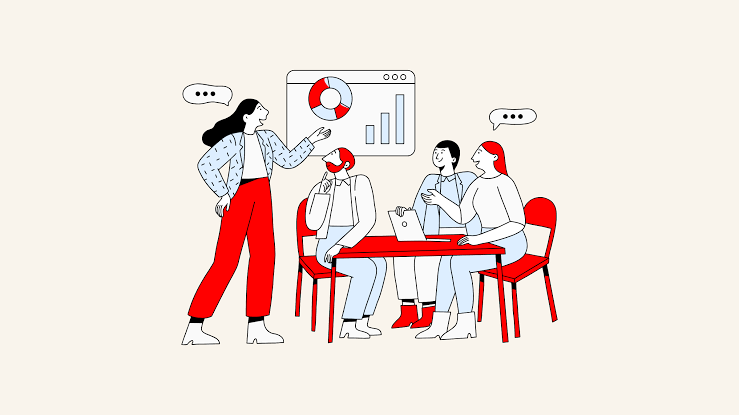
Marketing has traditionally required significant time, budget, and manpower to scale effectively. Artificial intelligence is changing that equation entirely — allowing businesses of all sizes to do more with less, personalize at scale, and make faster, data-driven decisions. This guide explores practical ways businesses can use AI to scale their marketing efforts and drive sustainable growth.
Why AI Is a Game-Changer for Marketing Scale

Scaling marketing traditionally meant hiring more people, increasing ad spend, or stretching your team thin across more channels. AI changes this by:
- Automating tedious processes allows teams to concentrate on strategy and innovation.
- Analyzing massive amounts of data faster than any human team could.
- Personalizing content and offers for individual customers at scale.
- Reducing costs associated with content creation, ad optimization, and customer research.
- Enabling 24/7 customer engagement through chatbots and automated responses.
1. Use AI for Content Creation and Optimization
Content is the backbone of most marketing strategies, but producing it consistently is time-consuming.
- Use AI writing tools to draft blog posts, social media captions, email copy, and ad copy quickly.
- Leverage AI to repurpose one piece of content into multiple formats (e.g., turning a blog post into social posts, email newsletters, or video scripts).
- Use AI-powered SEO tools to identify keyword opportunities and optimize content for search engines.
- A/B test AI-generated headlines and copy variations to see what resonates best with your audience.
2. Personalize Customer Experiences at Scale
Personalization drives engagement and conversions, but manually tailoring content for every customer isn’t feasible at scale — AI makes it possible.
- Use AI-driven customer segmentation to group audiences based on behavior, preferences, and purchase history.
- Implement dynamic email marketing that adjusts content, offers, and subject lines based on individual customer data.
- Use AI-powered product recommendation engines (similar to those used by major e-commerce platforms) to increase average order value.
- Customize online experiences in real time according to user activity.
3. Automate Customer Interactions with AI Chatbots
AI chatbots allow businesses to engage customers instantly, without scaling human support teams proportionally.
- Deploy chatbots on your website and social channels to answer common questions and qualify leads 24/7.
- Use conversational AI to guide customers through the sales funnel, from initial inquiry to purchase.
- Integrate chatbots with your CRM to automatically capture and follow up on leads.
4. Optimize Advertising with AI-Powered Tools
AI can significantly improve the efficiency and ROI of paid advertising campaigns.
- Use AI bidding strategies (like those offered in Google Ads and Meta Ads) to automatically optimize ad spend for conversions.
- Leverage predictive analytics to identify which audience segments are most likely to convert.
- Use AI tools to generate and test multiple ad creative variations quickly, identifying top performers faster.
- Reduce wasted ad spend by using AI to detect underperforming campaigns in real time.
5. Improve Marketing Analytics and Decision-Making
AI excels at processing large volumes of data and surfacing actionable insights.
- Use AI-powered analytics platforms to track customer journeys across multiple touchpoints.
- Identify patterns and trends in customer behavior that would be difficult to spot manually.
- Use predictive analytics to forecast future trends, customer churn, or campaign performance.
- Set up AI-driven dashboards that provide real-time performance insights without manual reporting.
6. Streamline Social Media Management
Managing multiple social platforms consistently is one of the most time-intensive marketing tasks — AI can lighten the load.
- Use AI tools to schedule posts at optimal times based on audience engagement data.
- Generate social media captions, hashtags, and content ideas using AI writing assistants.
- Use AI-powered social listening tools to monitor brand mentions, sentiment, and industry trends.
- Automate responses to common social media inquiries while flagging complex issues for human follow-up.
7. Enhance Email Marketing Campaigns
Email is still one of the most profitable marketing channels, and AI has the potential to increase its efficacy.
- Use AI to determine optimal send times for each subscriber based on past engagement.
- Automatically segment email lists based on behavior and predicted interests.
- Generate subject lines and email copy variations to test for higher open and click-through rates.
- Use predictive analytics to identify subscribers at risk of unsubscribing and trigger re-engagement campaigns.
8. Use AI for Market Research and Competitive Analysis
Understanding your market and competitors is essential for growth — AI speeds up this process significantly.
- Use AI tools to analyze competitor content, ad strategies, and pricing in real time.
- Leverage AI-powered sentiment analysis to understand how customers feel about your brand versus competitors.
- Use AI to identify emerging trends in your industry before they become mainstream.
Common Challenges When Scaling Marketing with AI
While AI offers significant advantages, businesses should be aware of potential pitfalls:
- Over-automation: Losing the human touch in customer interactions can hurt brand trust if not balanced properly.
- Data quality issues: AI is only as good as the data it’s trained on — poor data leads to poor recommendations.
- Content authenticity: AI-generated content should be reviewed and edited to maintain brand voice and avoid generic messaging.
- Tool overload: Adopting too many AI tools at once without a clear strategy can create inefficiencies rather than solving them.
Getting Started: A Practical Approach
- Identify bottlenecks in your current marketing process where AI could save the most time or improve results.
- Start small with one or two AI tools rather than overhauling your entire marketing stack at once.
- Measure results against clear KPIs to ensure AI tools are actually driving growth.
- Combine AI efficiency with human creativity — use AI for scale and speed, but keep strategy and brand voice human-led.
- Continuously optimize as you gather more data on what’s working.
Conclusion
AI is no longer a futuristic advantage reserved for large enterprises — it’s an accessible, practical tool that businesses of any size can use to scale their marketing efforts efficiently. From content creation and personalization to advertising optimization and customer engagement, AI enables businesses to do more with less while delivering better results. The key to success lies in strategic implementation: using AI to enhance human creativity and decision-making rather than replace it, ensuring sustainable, scalable business growth.